
"You made me lose fifty bucks."
My eye doctor stopped me in the lobby on my way out, the day I bought the orange glasses.
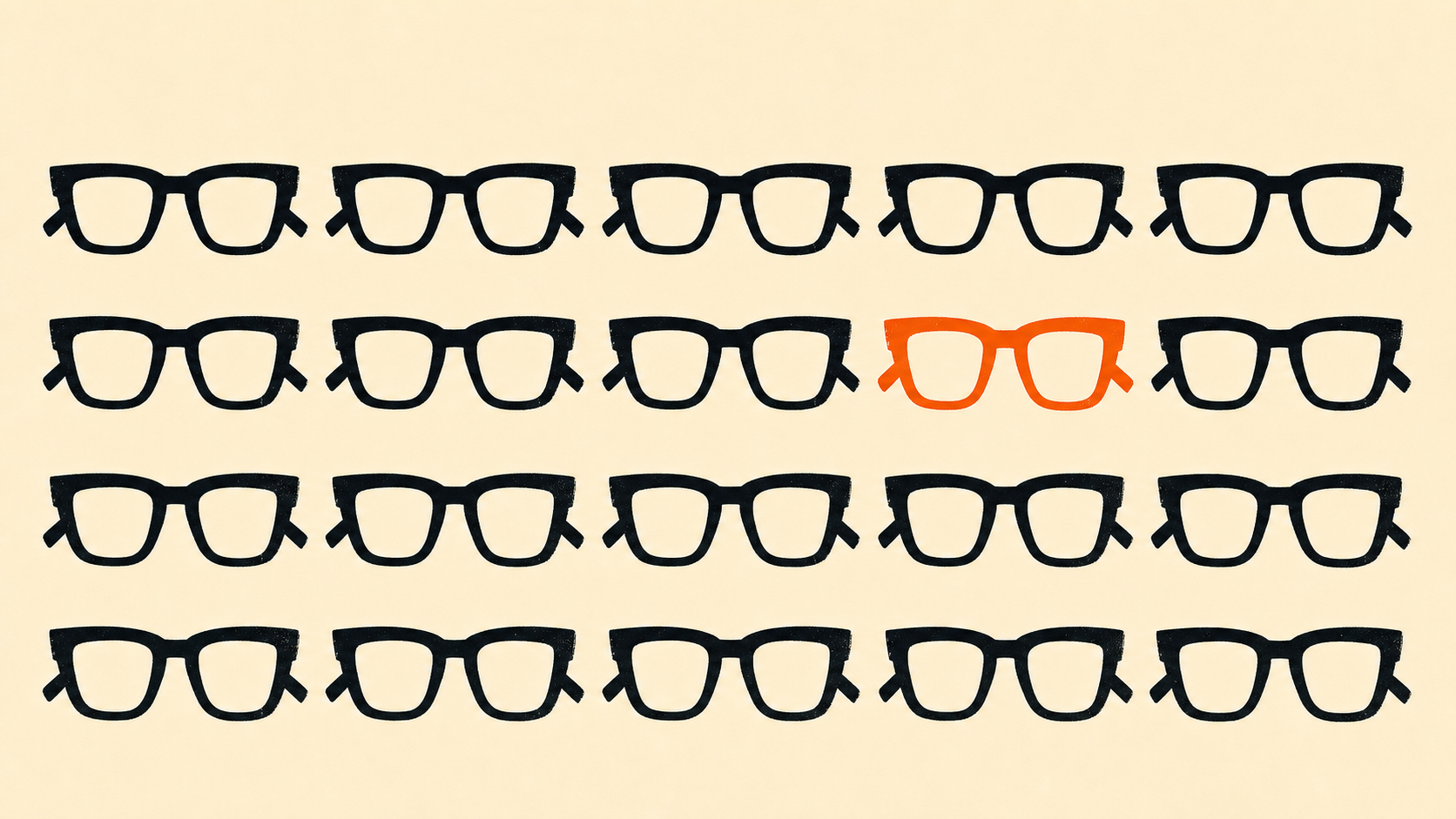
The frames had been on her display wall for two years. Neon orange, crisp metal, wayfarer shape. Her staff had wanted to order them. She had reluctantly let them place the order, with a bet included that nobody would ever buy a pair. For two years, nobody had.
I had seen them months earlier, at my daughter's appointment, and made a mental note: those glasses would be my next purchase. So when my own exam came around and the tech asked if I wanted to browse frames, I said no. I will take the orange ones.
I never tried them on. I did not need to. I had spent enough years in front of mirrors learning which shapes worked on my face that I knew, before they ever touched my head, that they were going to fit, in more ways than one. They did. Perfectly.
Which is how I ended up in the lobby, hearing about the bet from the doctor who had just lost it. Somebody bought them after all. I have been wearing them ever since.
Knowing the fit before you try it on
Walking in and buying frames sight-untried was not just a personality quirk, and it was not purely a branding stunt. It was pattern recognition. Years of trying on the wrong frames. Years of learning what worked and why. By the time I saw the orange ones, I was not guessing. I already knew.
That is the thing worth naming, because it is what a firm is actually hiring when it hires me.
Confidence is a byproduct. It is what is left in the room after almost two decades of being handed the ambiguous problem, walking into the meeting without the slide deck, and getting the number to move anyway. Regional AmLaw practices. A boutique family-law shop. Multiple plaintiff trial firms. A national plaintiff law firm handling personal injury and mass tort utility wildfire cases in Lahaina, Altadena, and Moss Landing, and toxic corporate pollution cases in Gloster, Mississippi, and Imperial Beach, California. Every one of those environments taught me, firsthand, the difference between what actually works and what only looks like it should.
The data read, then the move
Caution has real value in this profession. Consensus, benchmarks, and carefully staged options protect firms from expensive mistakes, and I spent years inside the rooms where those habits earn their keep. What those years taught me is how to recognize the moments that call for something else: read the data, watch the signal shift, take the recommendation to leadership early, and commit before the window closes.
A utility-caused wildfire burns, and the window for a credible response opens immediately. Search behavior begins to reveal what people need. Intake, media, and community outreach have to move as one system. The useful read is rarely the loudest one. It is the signal in the data that tells leadership where attention belongs, followed by the discipline to act while the decision can still matter.
See the move. Make it. Own the result. That is not a temperament. It is what almost two decades of running plaintiff and AmLaw marketing drilled into me, one rep at a time.
Building the firm I would have hired
I am starting The Orange Glasses because this is the work I know firsthand: almost two decades of watching a marketing plan go into a room and come out as caseload, and learning how to turn performance data into a clear decision, an executable plan, and measurable accountability. That is what I want a firm to get when it brings me in.
Not a deck of options to deliberate. Someone who goes deep into the performance data, finds the signal in it, translates that signal into a specific recommendation, and stays accountable for what happens after leadership acts on it.
This is the practice I kept wishing existed when I was the one doing the hiring, so I built it.
Why the glasses, then
The glasses have become a recognizable part of my professional identity. Every partner I have worked with has a version of the story, and they are how the mailroom knows I am in the building. But recognition is not the point. Whatever the glasses mean, they mean it because of the judgment and the contribution people came to associate with the person wearing them, because a pair of frames never moved a caseload number.
What a room remembers, if you have done the work, is not just what you wore. It is the analysis you brought that gave the room a clearer view of the problem, the preparation that let you speak in specifics when the moment needed them, and the call you were willing to make while it was still uncomfortable to make it. The glasses just made it easy to remember exactly who said it.
Orange, for me, is a commitment to being visible. If I am in the room, I am willing to be seen, to state plainly the recommendation the data supports, and to answer for how it turns out. What I want remembered is what I said and what it contributed. The glasses are the cue. The call is the substance.
That is why this publication exists too. Plaintiff marketing is a discipline that few write down honestly, in part because the people who know best are usually inside firms doing it, and much of what is written about it comes from outside the firms doing the work. The Plaintiff Marketer is my attempt to close that gap. Written from the seat, in the voice you would use in the intake room, about the work as it actually gets done. Evidence, judgment, execution, and accountability.
The Orange Glasses. Because that is what people already called me. And because the bet I want to keep winning is the one I made in that lobby: do the work before you walk in, know what you are there to say, and say it while it can still change the outcome.